Videos illustrating topics covered on this site: Protista
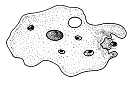
Amoeba in motionfrom drralfwagnerFirst the colorless ectoplasma moves in front of the pseodopodia, followed by the grained entoplasma. The video is done with the phase contrast technique. Please have a look at my homepage for more: http://www.dr-ralf-wagner.de See: |
|
Amoeba feedingfrom jsmeadThe amoeba puts out a pseudopodium and engulfs a small flagellate See: |
|
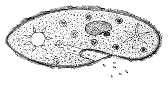
Parmecium eating pigmented yeastfrom wxfix - Linny Merrybird.The yeast cells have been stained with a dye (Congo red). This doesn't show up until they are grouped together in a food vacuole. The first stage of digestion is acid and the final phase is alkaline. This turns the dye from red to blue. See: |
|
Paramecium: contractile vacuolefrom ppornelubioThis video has an audio commentary. The feeder channels bring water to the vacuole which then contracts See: |
|
Paramecium feedingfrom jsmeadIn the Paramecium static at the base of the screen, the ciliary current in the oral groove can be seen wafting food particles into the cytostome where they accumulate to form food vacuoles. These vacuoles then circulate round in the cytoplasm of the Paramecium. The contractile vacuoles can also be seen, filling and collapsing. See: |
|
Vorticella feedingfrom EDFWilliamsThe ring of cilia creates a current a which brings food particles to the oral groove where they form food vacuoles. |
|
Flagella and ciliafrom jayaa001This video has an audio commentary. A mixture of protista using flagella or cilia for locomotion or feeding |
|
See: Protista: structure and function
| Search this site |
| Search the web |
© Copyright D G Mackean & Ian Mackean. All rights reserved.
